Artist
Rakesh Sadhak
Biography
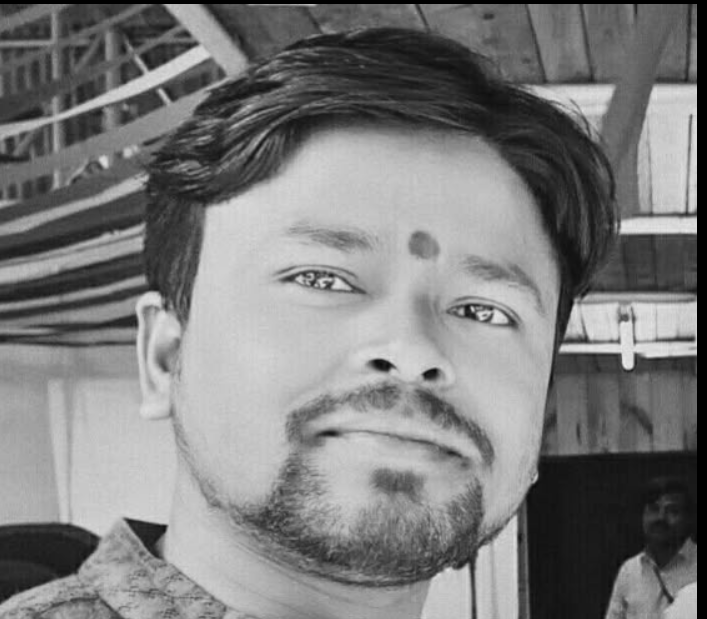
Rakesh Sadhak is an arresting voice in the landscape of contemporary Indian sculpture—an artist whose forms carry the weight of protest, not through loud gestures, but through silence, restraint, and interior intensity. A graduate of the Government College of Art and Craft, Kolkata (B.V.A., 2012) and Indira Kala Sangeet Vishwavidyalaya, Chhattisgarh (M.F.A., 2014), his sculptural language is shaped by formal training, introspective discipline, and a keen social consciousness.
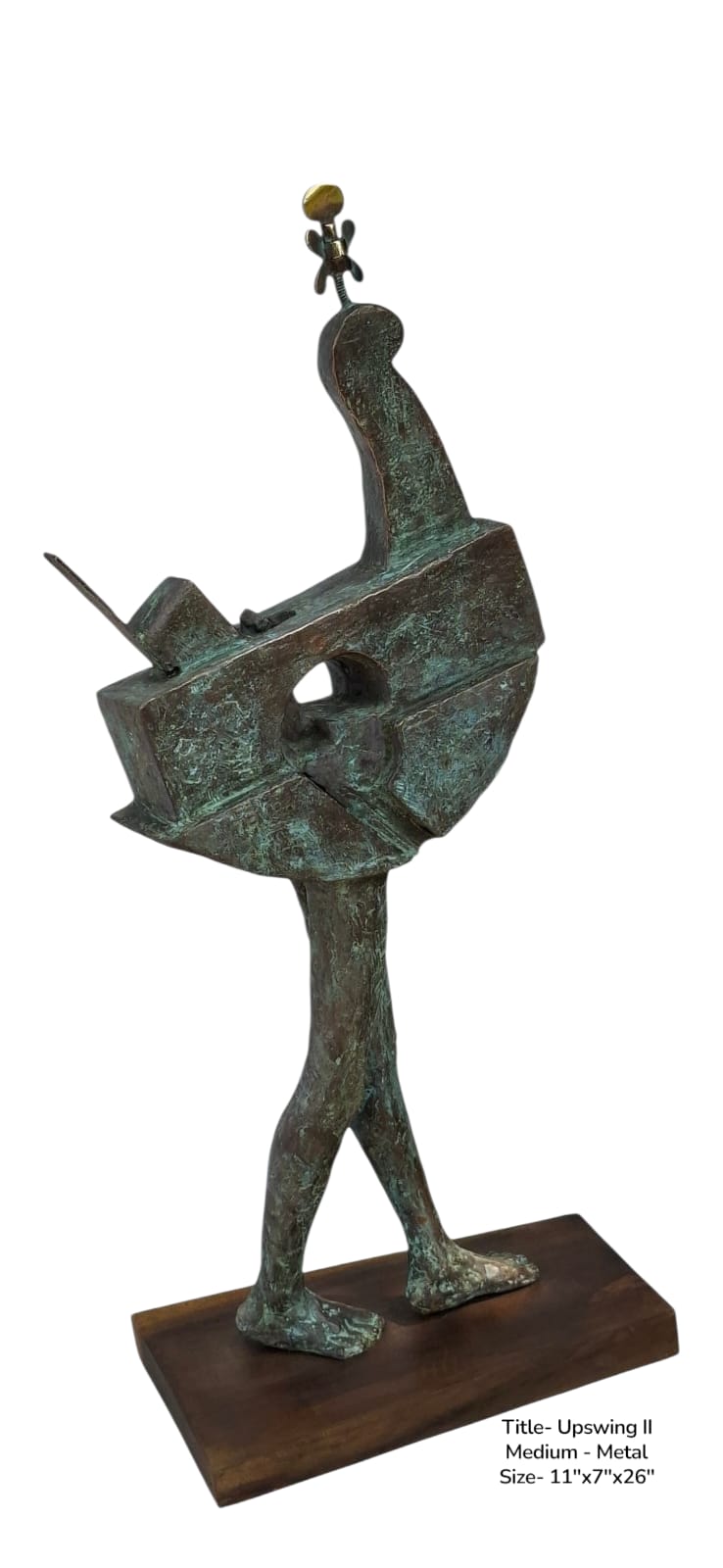
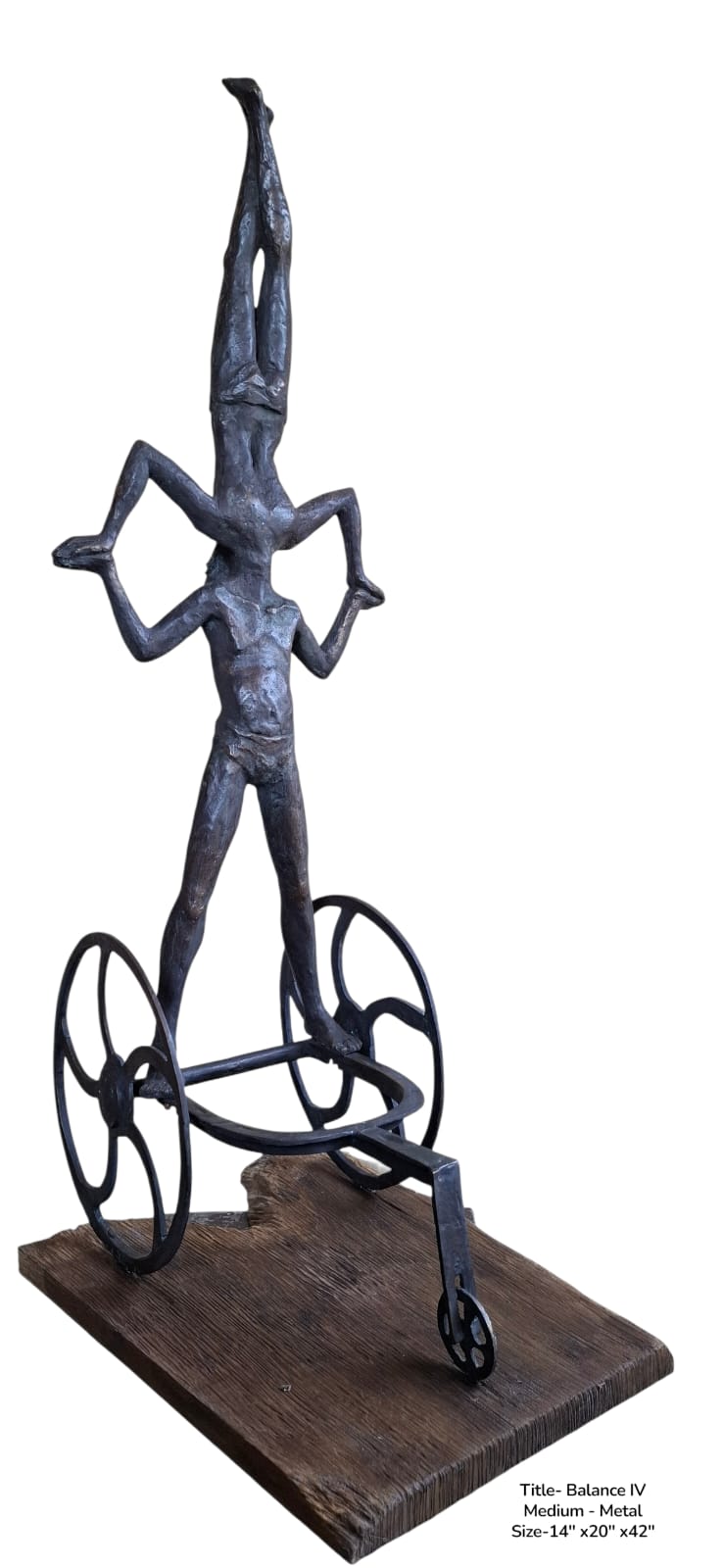
His works do not scream—they resist. Sadhak’s sculptures embody a quiet yet forceful opposition to structures of power, cultural amnesia, and psychological alienation. Each figure—fragmented, suspended, or distorted—reflects not only personal or existential trauma, but also an underlying resistance to the hegemonies that frame our existence. In his practice, silence is not the absence of sound—it is the presence of a deeper, more unsettling truth.
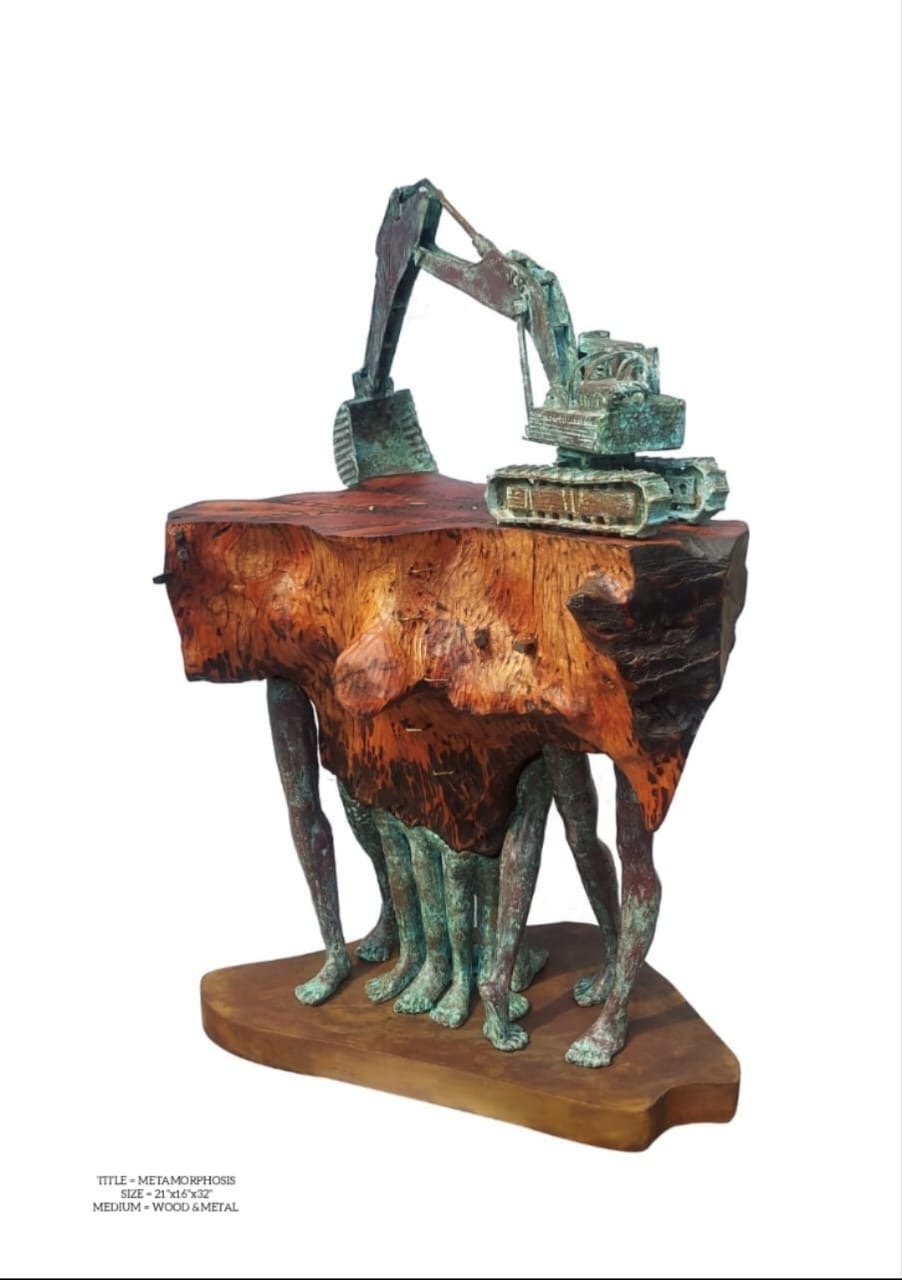
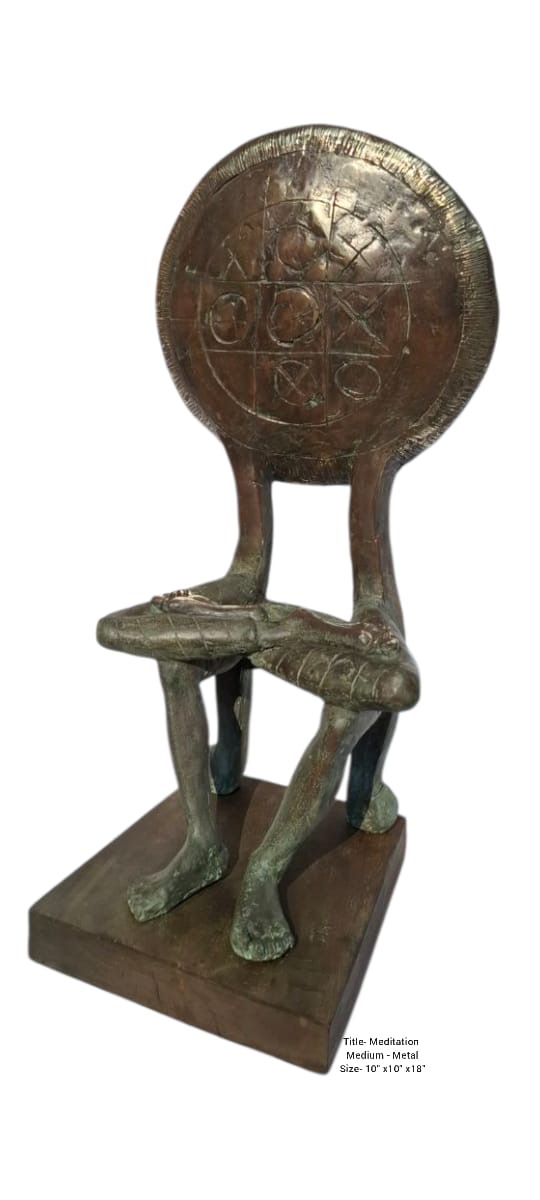
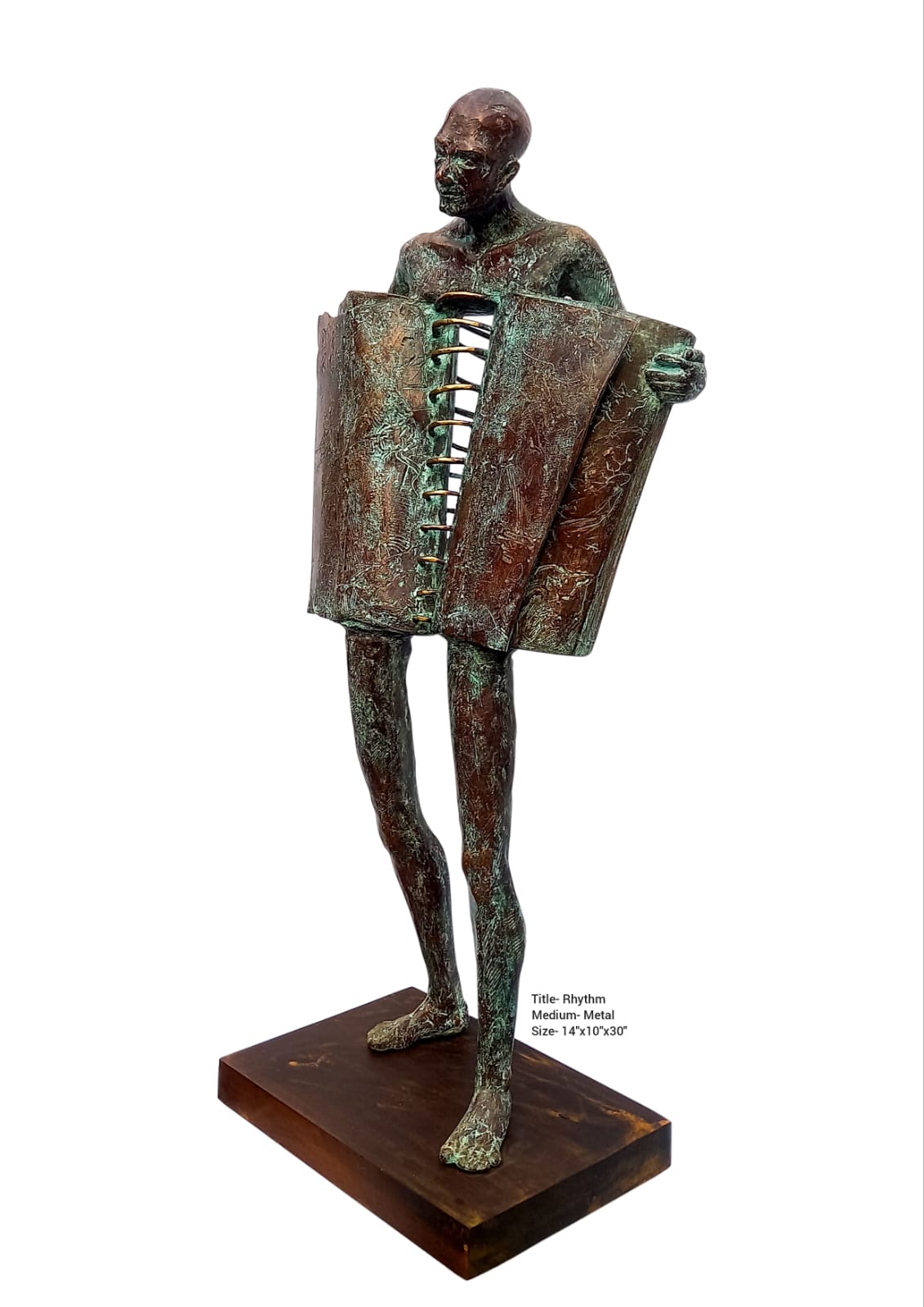
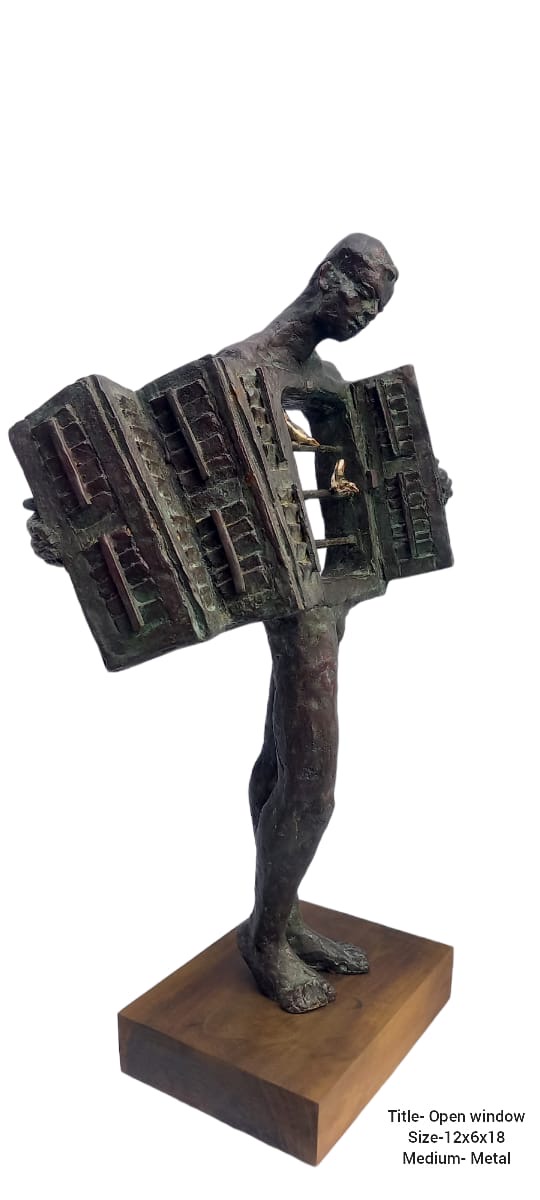
The artist’s figurative forms are rarely realistic; they are symbols, metaphors, and sites of inner tension. His bodies do not celebrate idealism—they carry the marks of burden, collapse, and transformation. One of the most arresting motifs in his work is the chair—not as a functional object, but as a loaded signifier of power and submission. In many sculptures, the human figure fuses with the chair: the chair’s legs become human limbs, the spine bends into its frame. These hybrid forms question how authority reshapes identity—how deeply power is internalized in the body and psyche.
The “chair-human” becomes a recurring symbol in Sadhak’s world—a representation of those who seek power, suffer beneath it, or are shaped by it. These forms expose the silent violence of domination. His sculptures reveal how people are consumed by the very symbols they construct, and how power, rather than liberating, often imprisons.
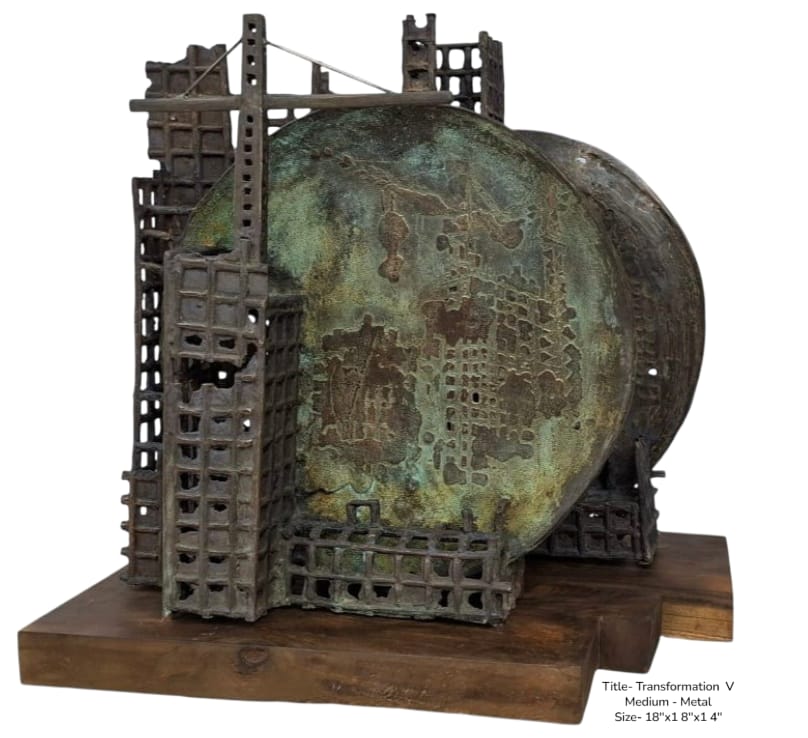
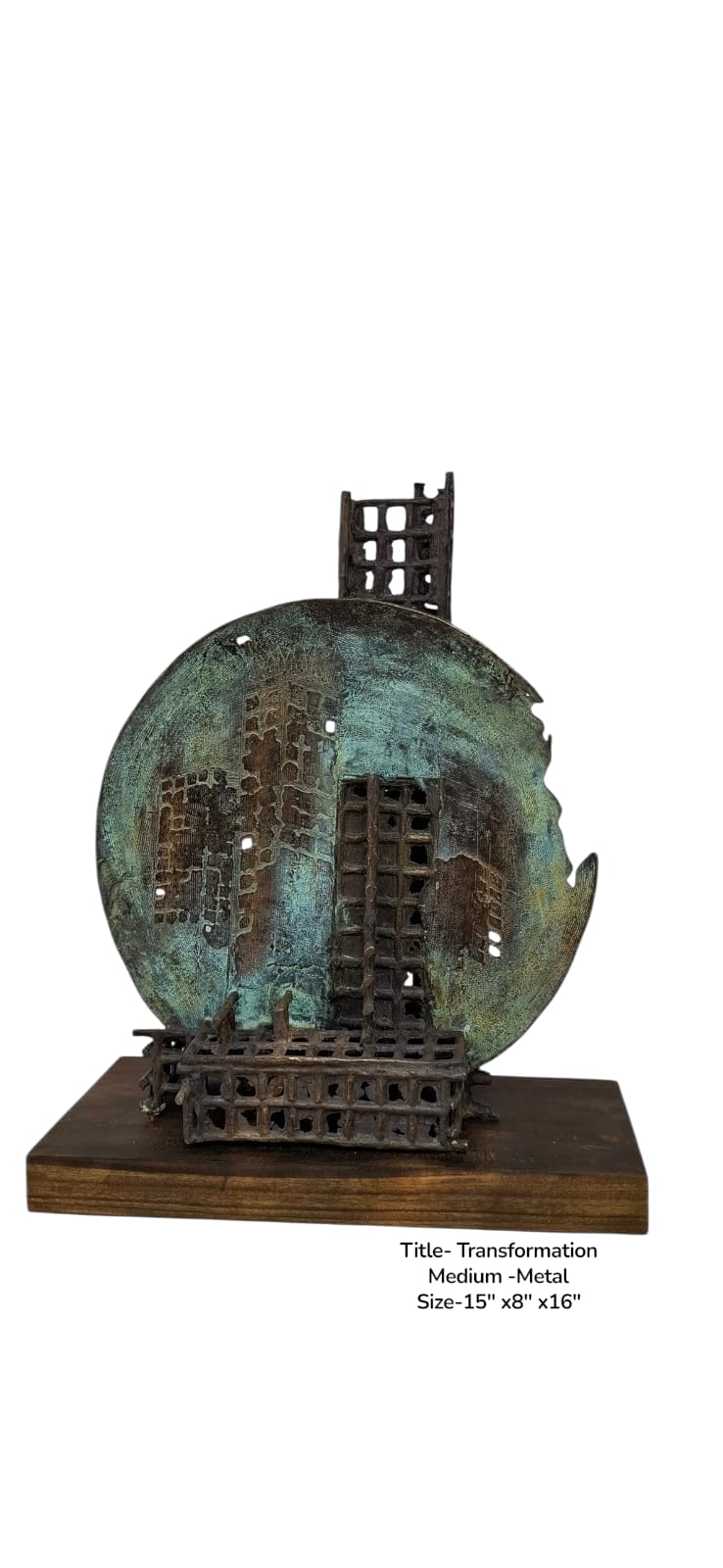
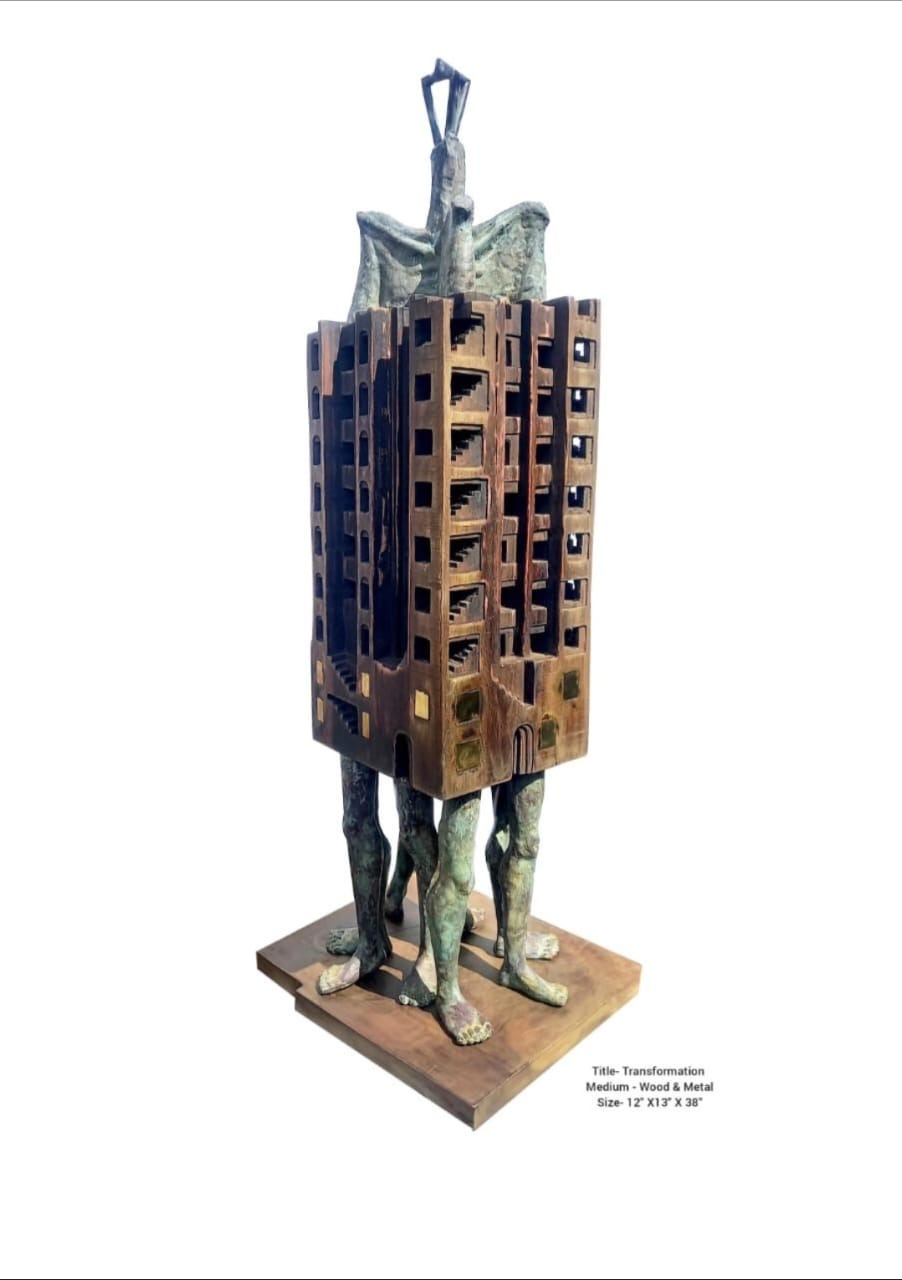
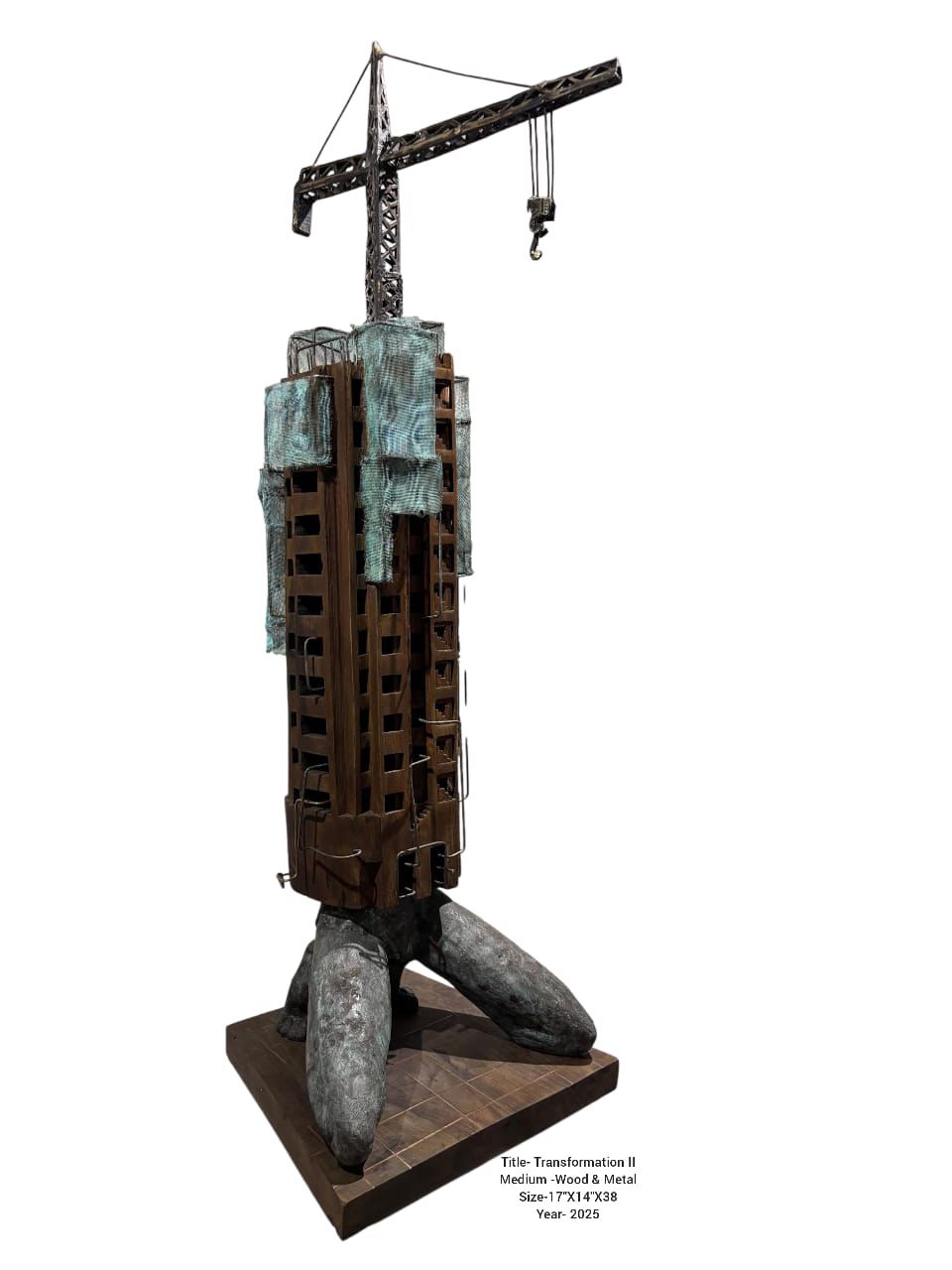
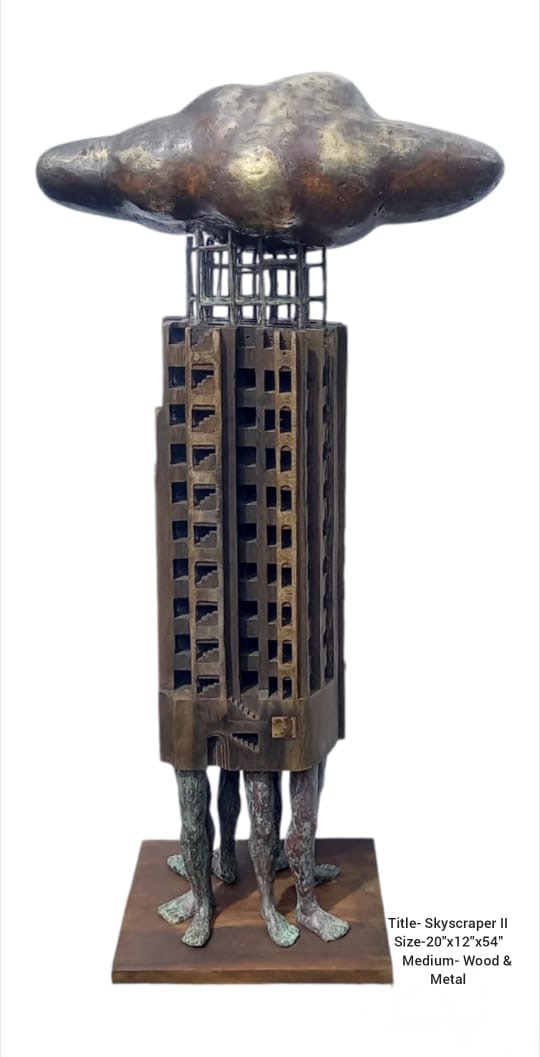
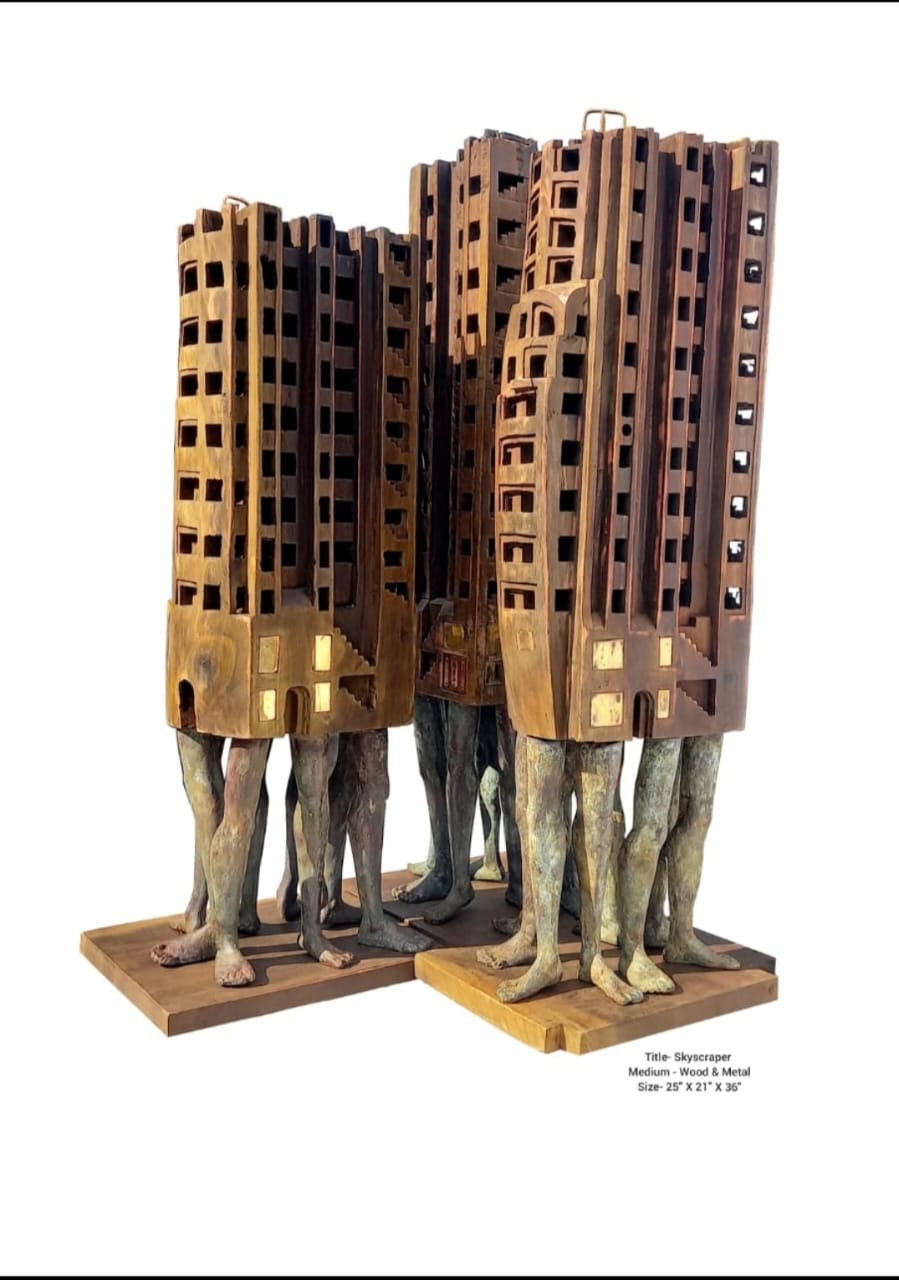
Beyond chairs, his use of surreal combinations—horses with domes of the Taj Mahal, Howrah Bridge emerging from bodies, crowds frozen into architectural fragments—build a kind of visual surrealism that critiques both history and the contemporary moment. The horse, often a symbol of speed and aggression, when combined with the Taj Mahal, suggests a strange fusion of heritage, beauty, and conquest. These metaphorical structures raise uncomfortable questions: Who builds monuments? Whose labor sustains legacy? What lies beneath the surface of glory?
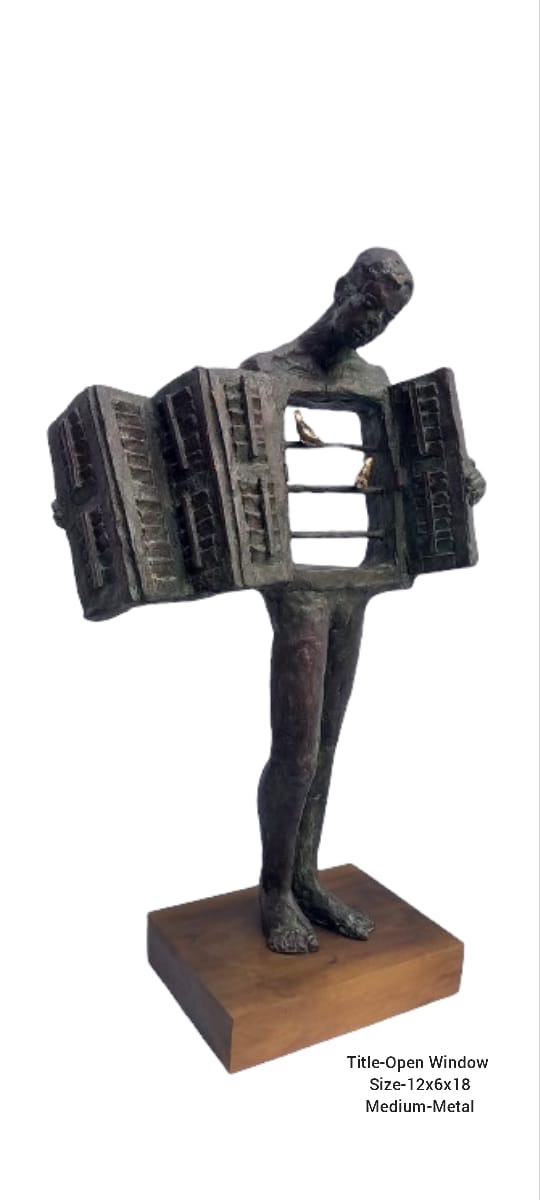
In these surreal hybrids, Sadhak does not offer spectacle—he offers slow-burning metaphors. Each sculpture becomes a site of reflection where architectural, historical, and bodily fragments coalesce to form a political interiority. His art isn’t political in an overt sense; rather, it is rooted in a deeper resistance—a resistance to simplification, to silence, to forgetting.
This undercurrent of protest has been visible throughout his exhibitions—Barisha Silpara Art Society (2009, 2012), Academy of Fine Arts (2011, 2016), Bombay Art Society (2013, 2015), Chitrakala Parishad, Bengaluru (2015), Yusuf Art Gallery, Kochi (2015), and Birla Academy (2016–17). In each of these, the viewer is drawn not into spectacle, but into confrontation—confrontation with power, memory, and the wounded body.
His awards—including the Odisha Lalit Kala Akademi Award (2013), South Central Zone Cultural Centre Award, Nagpur (2013), Debiprasad Roychowdhury Award, AIFACS Annual Exhibition Award (2016), Art Society of India Award (2018), and multiple Certificates of Merit—attest to the depth and relevance of his artistic voice. These are not accolades of style alone—they are acknowledgements of a subtle, continuous act of resistance.
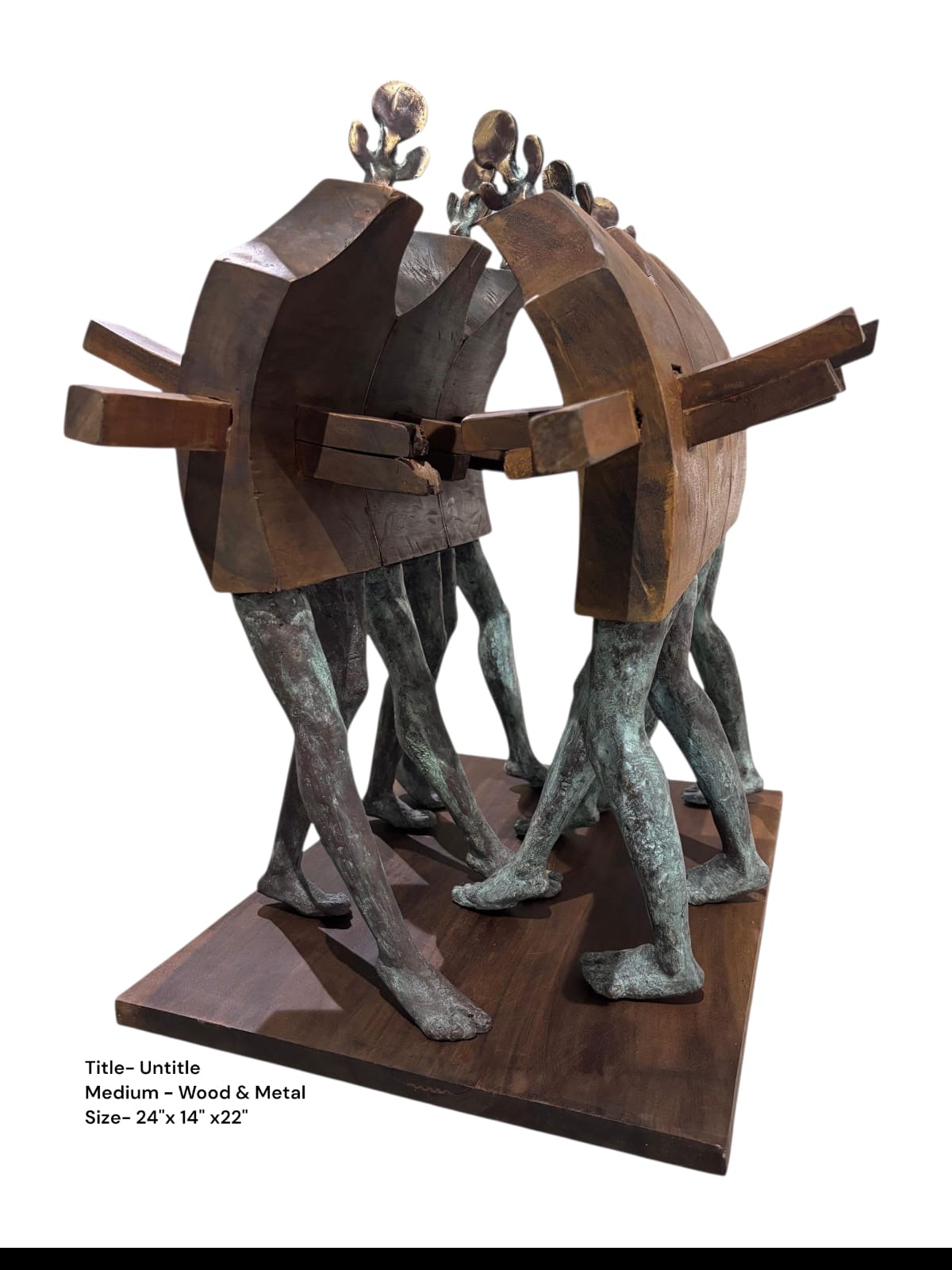
What truly distinguishes Sadhak’s work is that his sculptures are not only physical forms—they are protest embodied. Whether it's the bent back of a laboring figure, the fusion of man and chair, or the quiet mass of anonymous crowds, his art asserts itself against erasure. His figures are weighed down, yes—but they are also anchored in defiance.
He does not believe in flamboyance. Instead, he sculpts the dignity of stillness. In an art world often seduced by provocation and spectacle, Rakesh Sadhak’s practice reminds us that some of the most powerful resistance happens in silence, in fracture, and in introspection.
Ultimately, Rakesh is a sculptor of truth. His works are not answers—they are questions. Through each chiseled limb, each symbolic void, he asks:
What does power do to the body? What is the cost of survival? And what stories hide beneath the visible skin of things.
Portfolio